Educational Play
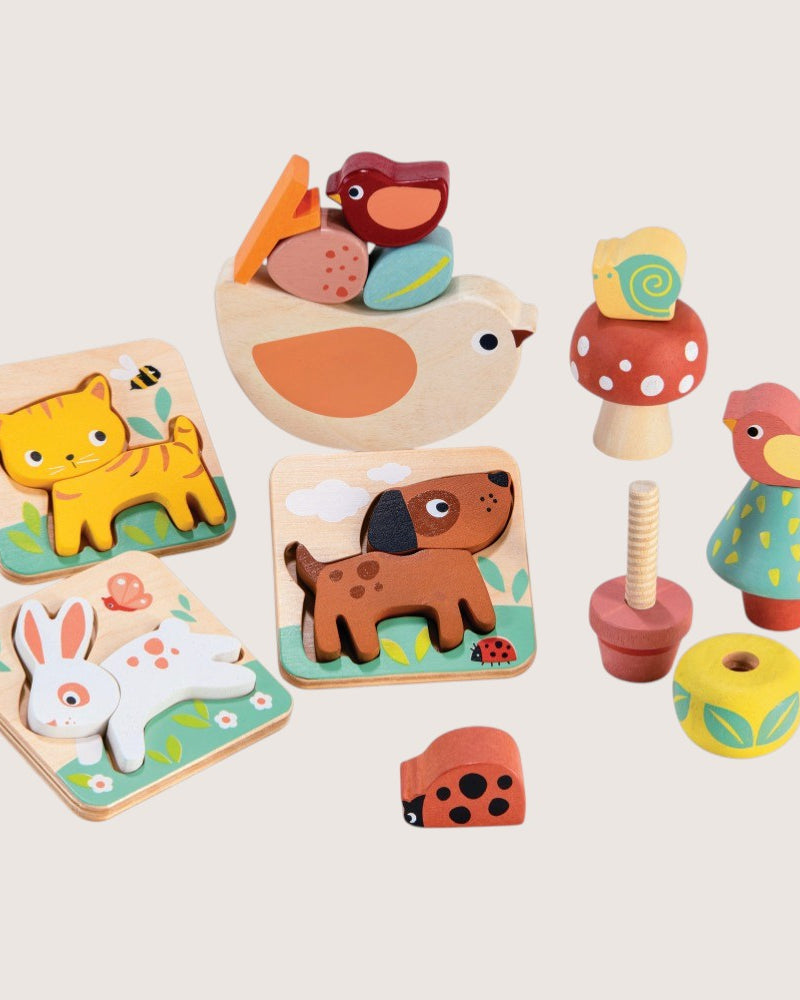
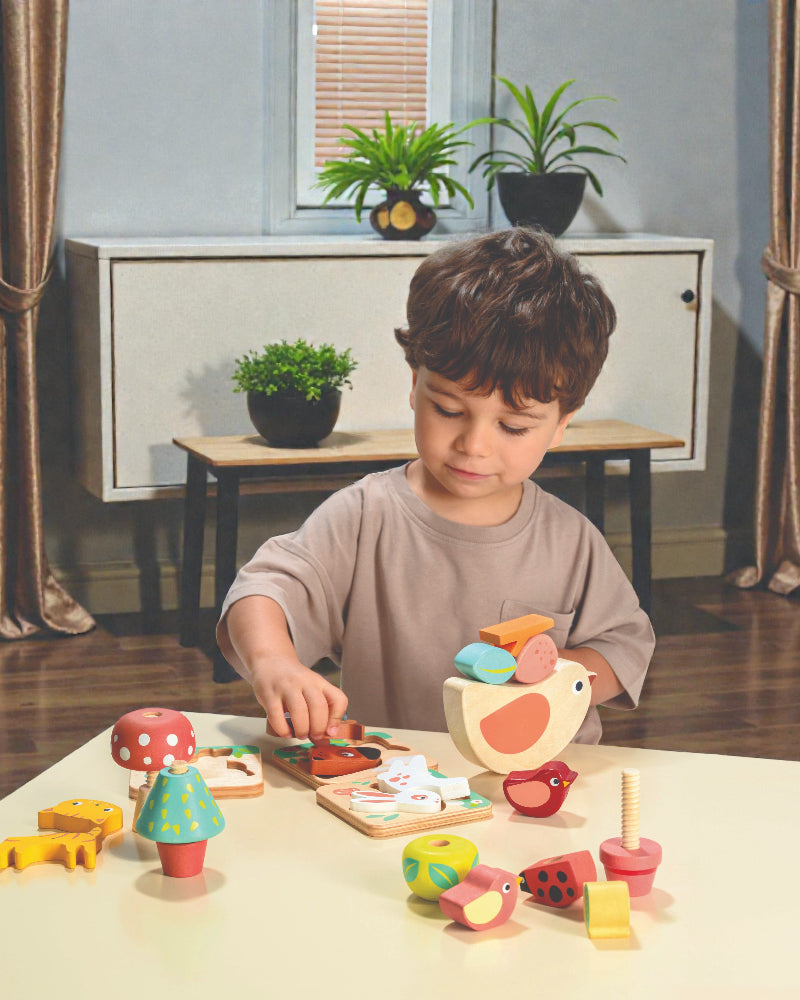
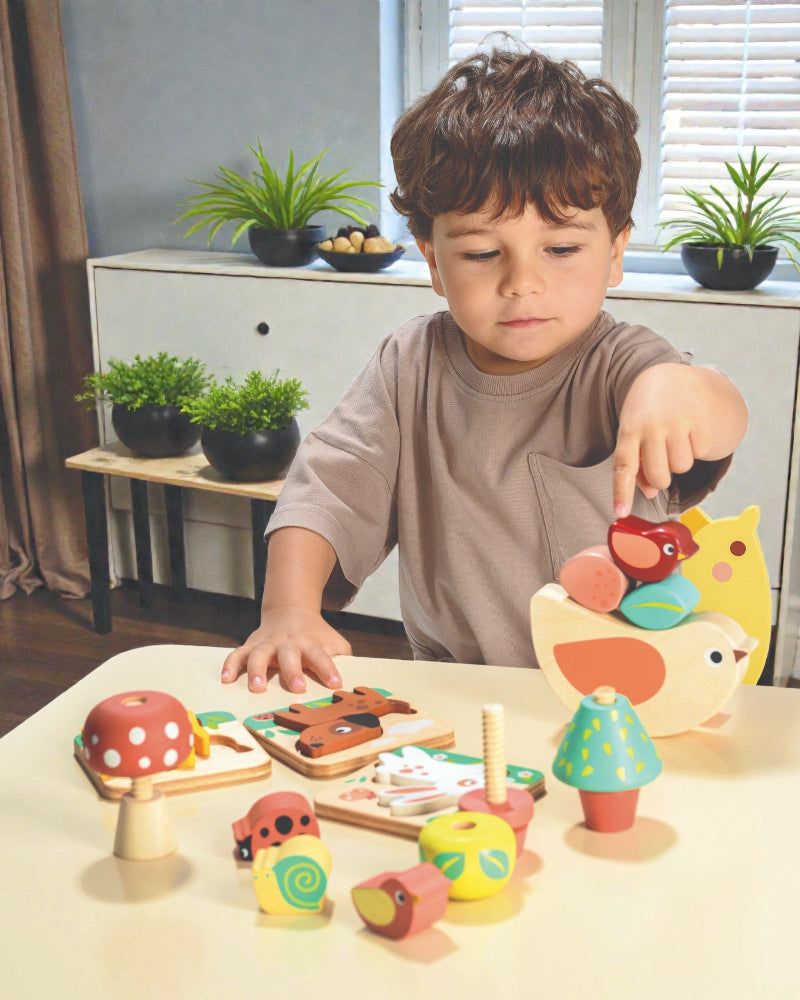
Children don't need apps to learn—they need hands-on experiences that make education feel like play. Our Educational Play collection brings together Montessori-inspired wooden toys, developmental activity sets, and problem-solving games that teach colors, counting, sorting, physics, and critical thinking through self-directed exploration.
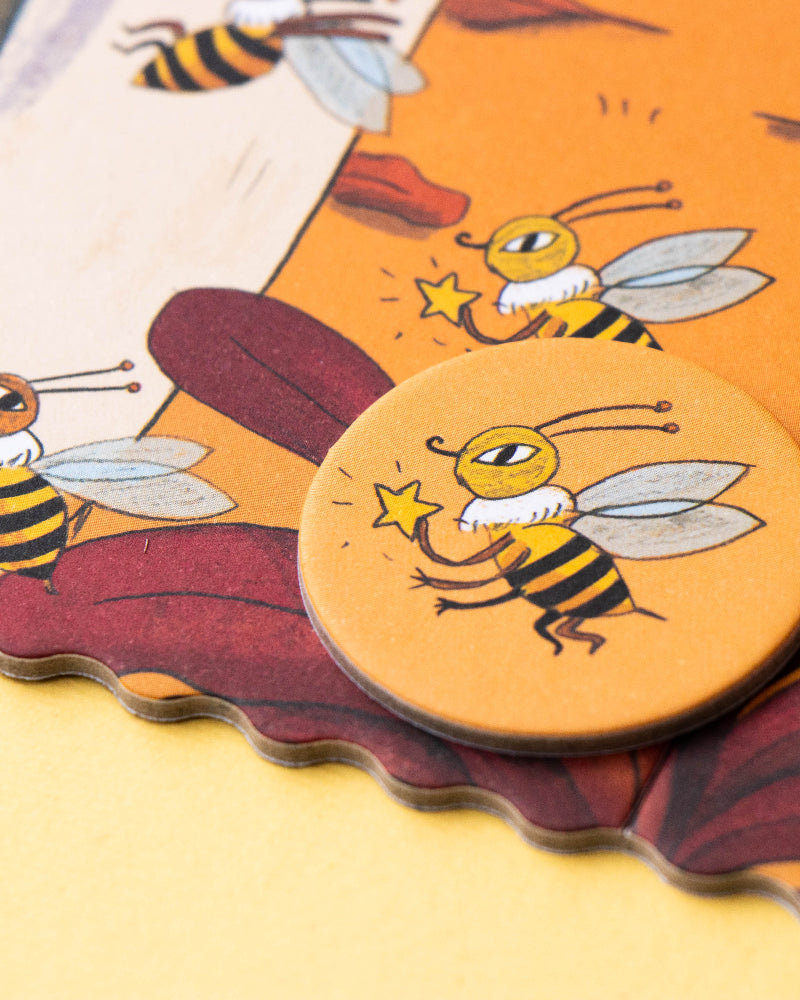
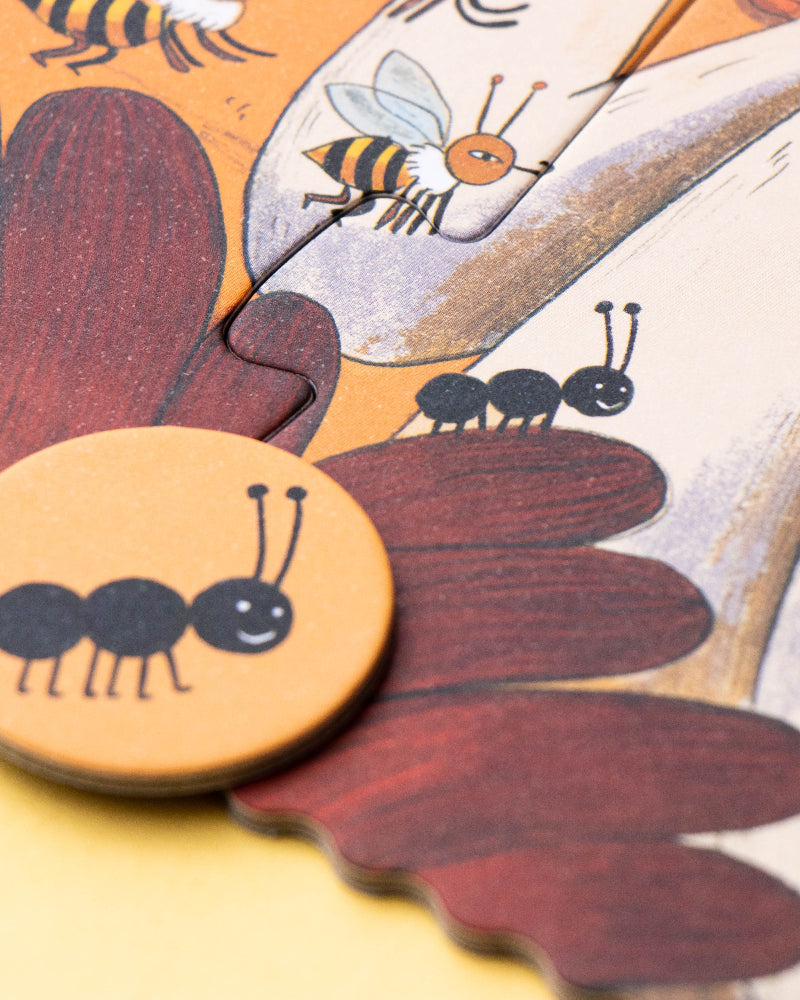
Award-winning designs like the PlanToys Beehives use natural materials and child-led discovery to build cognitive skills without flashcards or screens, while thoughtfully calibrated activity cubes grow with your child through multiple developmental stages. Each toy in this collection follows the principle that children learn best when they're actively engaged with their hands and minds—manipulating wooden pieces, experimenting with balance and gravity, and discovering cause-and-effect relationships through real-world play. Research-backed designs meet strict safety standards while addressing specific age milestones, giving parents confidence that playtime directly supports school readiness. These toys respect children's natural curiosity while building the foundation for lifelong learning, proving that the most effective educational tools are often the simplest, most beautifully crafted ones.
The foundation of educational play lies in understanding that children's brains develop through sensory experiences, not passive consumption. Our collection prioritizes toys that require active manipulation, problem-solving, and discovery—the kind of engagement that forms neural pathways supporting academic success. Montessori toys dominate our educational offerings because Dr. Maria Montessori's century of research proves that children learn most effectively through self-directed activity with purposeful materials. The Montessori Coin Sorting Box exemplifies this philosophy: children independently discover that different colored coins fit specific slots, building color recognition, fine motor control, and the satisfaction of mastery without adult intervention. This self-correcting design means success comes from the child's own problem-solving rather than external validation—fostering the intrinsic motivation and resilience that determines long-term academic achievement far more than any memorized fact.
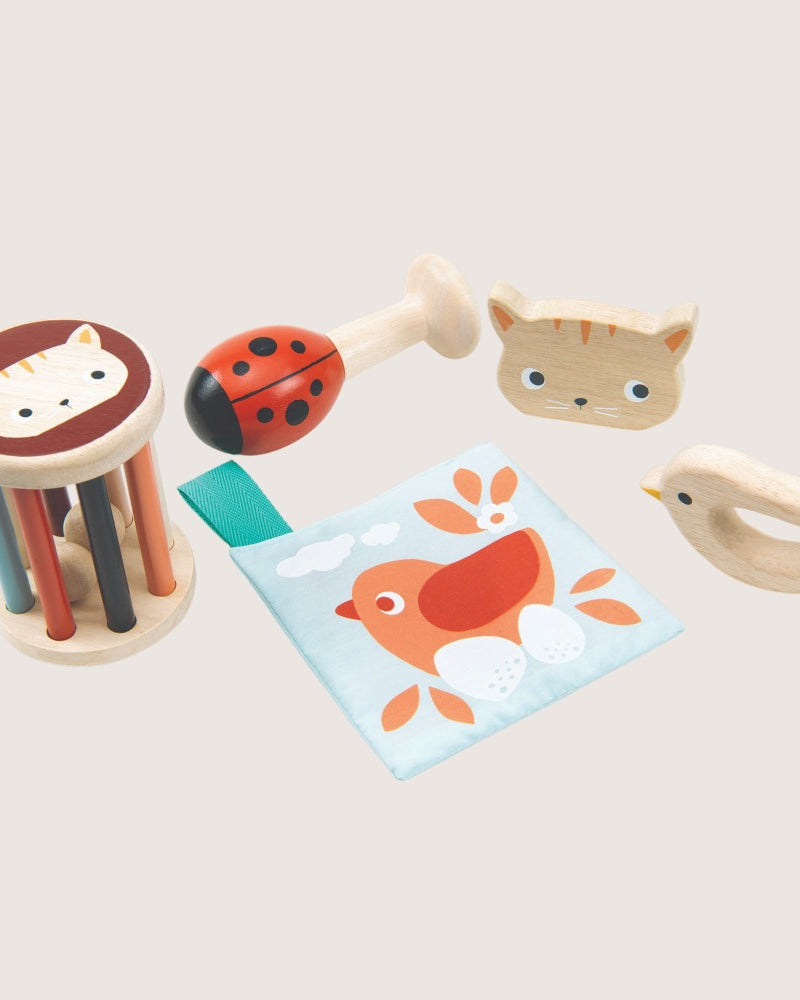
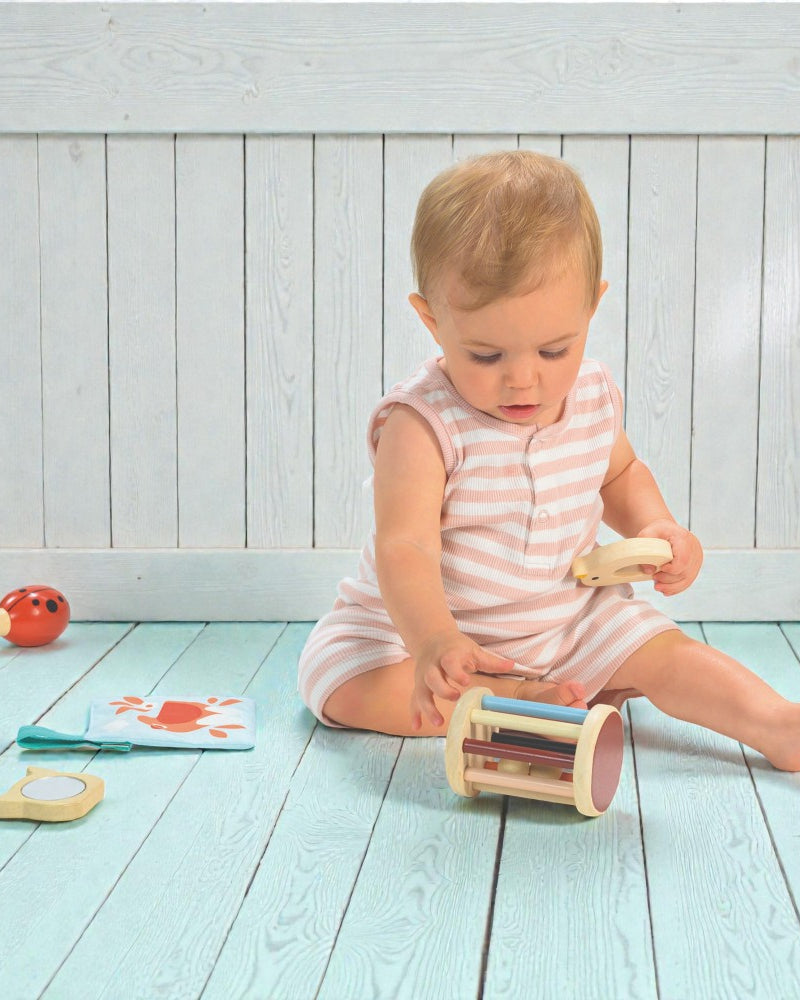
Age-appropriate calibration separates truly educational toys from generic "learning" products that overwhelm children with features they're not developmentally ready to master. Our Garden Playtime Gift Boxes demonstrate this principle perfectly, curating 4-7 toys specifically matched to developmental milestones at 6 months, 12 months, 18 months, and 24 months. The 6-month box focuses on grasp-and-mouth sensory exploration with safe wooden rattles and textured rings, while the 24-month box introduces complex problem-solving through shape sorters and stacking challenges. This developmental progression matters because toys presented too early create frustration and learned helplessness, while toys presented too late miss critical windows for skill development. Educational play requires matching challenge level to capability—the "just right" difficulty that keeps children engaged without overwhelming them.
Fine motor development and cognitive growth happen simultaneously through well-designed educational toys. The PlanToys Beehives—winner of Japan's Good Toy Award—teaches this dual development beautifully: children use wooden tongs to grasp colorful bees and match them to corresponding hives, simultaneously building the pincer grip essential for writing while learning color recognition, counting, and one-to-one correspondence. The physical challenge of controlling tongs strengthens hand muscles and develops hand-eye coordination, while the cognitive challenge of matching and sorting builds classification skills and visual discrimination. This integration of physical and mental skill-building explains why hands-on educational toys produce better learning outcomes than screen-based alternatives—children can't develop fine motor control by tapping tablets, no matter how "educational" the app claims to be.
Shape recognition and spatial reasoning form the foundation for mathematics, engineering, and scientific thinking—skills that begin developing in infancy through hands-on manipulation of three-dimensional objects. Le Toy Van's Noah's Shape Sorter Ark transforms this critical learning into biblical storytelling, with chunky wooden animal pairs that must be matched to corresponding openings in the ark's hull. As toddlers rotate animals to find the correct orientation, they're developing spatial reasoning and problem-solving persistence while unconsciously preparing for geometry concepts years away. The rolling wheels add gross motor engagement, encouraging toddlers to push their ark across floors while building core strength and coordination. This multi-layered learning—fine motor control, shape recognition, spatial reasoning, gross motor development, and narrative play—demonstrates how premium educational toys pack extraordinary developmental value into beautifully simple designs.
Cause-and-effect understanding develops through toys that provide immediate, natural feedback for children's actions. Wooden Rain Sound Cylinders teach this concept elegantly: when children tip the cylinder, colored beads cascade through internal chambers creating soothing rainfall sounds. The transparent panels let children see the beads falling, connecting the action (tipping) with the result (sound and visual movement). This immediate feedback loop teaches fundamental physics—gravity, motion, sound production—through sensory experience rather than explanation. Young children can't yet understand verbal explanations of cause and effect, but they absolutely grasp it when they control outcomes through their own actions. Educational toys that provide this authentic feedback build scientific thinking from the earliest ages.
Our wooden toys category overlaps significantly with educational play because quality wooden construction inherently supports learning better than plastic alternatives. Wooden blocks teach balance, symmetry, and structural integrity through authentic weight and realistic physics—when a wooden tower falls, it provides genuine tactile and auditory feedback that plastic's hollow lightness cannot match. Children building with wooden materials learn actual engineering principles: wide bases create stability, symmetrical distribution prevents toppling, and height increases instability. These aren't abstract concepts taught through explanation—they're physical laws discovered through hands-on experimentation, the kind of deep learning that forms lasting understanding rather than memorized facts quickly forgotten.
Counting and number sense develop through concrete manipulation before children can grasp abstract mathematical concepts. Wooden counting toys, stacking rings numbered 1-10, and sorting games that require grouping specific quantities all build the foundational understanding that numbers represent actual things—not just symbols to memorize. When a three-year-old carefully counts five wooden animals into Noah's Ark, they're building one-to-one correspondence (matching one number word to one object), cardinality (understanding that "five" represents the total quantity), and number sequence (knowing the counting order). These prerequisite skills make formal mathematics instruction successful years later, yet they can only be learned through physical manipulation of concrete objects. Educational toys that make counting tactile and purposeful create mathematical thinkers rather than rote memorizers.
Problem-solving persistence—the willingness to keep trying when something doesn't work—determines academic and life success far more than innate intelligence. Educational toys with self-correcting designs build this critical trait naturally. When a shape won't fit through a sorting hole, children see immediate feedback: it doesn't go through. No adult needs to say "that's wrong"—the toy itself communicates the mismatch, encouraging children to try different approaches without fear of failure or shame. This trial-and-error learning builds resilience, creative thinking, and the understanding that mistakes are information rather than failures. Children who develop problem-solving persistence through educational play approach school challenges with confidence, knowing they can figure things out through systematic experimentation.
Multi-sensory engagement through educational toys creates stronger neural pathways than single-sense learning. When children manipulate wooden educational toys, they're simultaneously: seeing colors and shapes (visual processing), feeling textures and weights (tactile processing), hearing the sound of pieces connecting (auditory processing), and moving their bodies to reach and grasp (proprioceptive processing). This multi-sensory integration creates robust learning that transfers across contexts—children don't just learn that a circle is round by looking at pictures, they know it through feeling smooth curves, seeing the shape roll, and experiencing how it fits through round holes but not square ones. Educational toys that engage multiple senses simultaneously create the kind of deep, embodied learning that traditional worksheet activities simply cannot match.
The educational toy market overflows with products claiming developmental benefits, but premium manufacturers like PlanToys, Le Toy Van, and Tender Leaf Toys back their designs with actual child development research rather than marketing buzzwords. PlanToys consults with child development experts throughout their design process, ensuring each toy targets specific skills at appropriate developmental stages. Le Toy Van's award-winning recognition from international toy organizations validates their educational effectiveness. These companies invest years perfecting designs that genuinely support learning rather than rushing trendy products to market. When you choose educational toys from research-backed manufacturers, you're investing in tools that actually deliver the developmental benefits they promise.
At Playroom Collective, we believe educational play should never feel like work disguised as fun—it should be genuinely engaging play that happens to build critical skills. Our Educational Play collection offers toys children return to repeatedly because they're actually enjoyable, not because adults force "educational time." From first sensory rattles for 6-month-olds to complex problem-solving challenges for kindergarteners, every toy respects children's intelligence while supporting their developmental journey. Screen-free, hands-on, and backed by child development research, these educational toys prove that the most effective learning tools are often beautifully simple wooden pieces that invite endless exploration.
Discover how premium educational toys transform playtime into genuine learning. Our collection offers everything from Montessori sorting games to award-winning developmental sets, all designed to build school readiness through the kind of joyful play children love. Explore our educational play collection today and give your child tools for learning that actually work—no screens, no apps, just hands-on discovery that builds capable, confident learners.