When we started researching wooden toys, everyone told us about the "benefits." Eco-friendly. Non-toxic. Educational.
All true. Also all kind of... obvious?
What nobody mentioned were the things that actually matter in day-to-day life. The small shifts that add up. The surprises that made us wonder why we didn't make this switch sooner.
Here are the things we wish someone had told us before we only started buying wooden toys:
1. They Don't Multiply Overnight

You know how plastic toys seem to breed in the dark? You buy a few, and then somehow there are dozens by the end of the month?
That doesn't happen with wooden toys.
Maybe it's because they cost more, so you're more intentional. Maybe it's because they're substantial enough that you don't feel the need to keep adding more. Maybe it's because one good set of stacking blocks actually does more than ten plastic ones.
Whatever the reason, the toy creep just... stops.
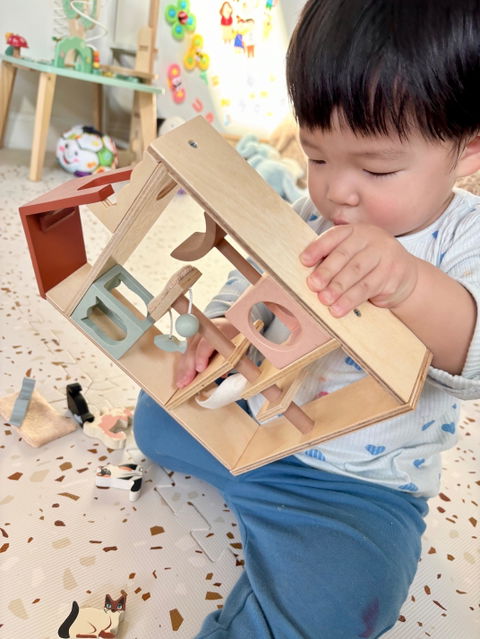
We have the tabletop easel. The activity cube. The beehive sorting game. That's it. That's the collection.
Fewer toys. More play. Less stuff to trip over at midnight.
Nobody told us that "buying quality" would actually mean buying less. But here we are.
2. Your Kids Will Fight Over Them (In a Good Way)

We expected fights. "Mine!" "I had it first!" The usual sibling warfare.
But wooden role play toys create a different kind of fighting: the kind where both kids actually want to play together.
The wooden doctor kit needs a patient and a doctor. The vet set has enough realistic tools that one kid examines while the other assists. The vlogger set turns one into the filmmaker, the other into the star.
They're not fighting over the toy. They're negotiating roles. Collaborating. Creating entire scenarios that require both of them.
That's not conflict. That's play that actually brings them together.
Nobody told us wooden toys would be sibling peace treaties. But that's exactly what they became.
3. They're Actually Cleaner (Yes, Really)

Here's something nobody mentions: wood naturally fights bacteria. Plastic? Basically a bacteria hotel.
Studies show bacteria die on wood surfaces but multiply on plastic. When you're handing toys across an airplane tray table, through a grocery cart, or across a restaurant high chair, that actually matters.
The build-a-face kit that lives in the diaper bag. The hollywood film camera that fits in the stroller pocket. The music set underneath the front car seat.
These portable wooden toys go everywhere—airports, waiting rooms, restaurants. And we don't cringe when they hit the floor anymore.
Wood's natural antimicrobial properties mean we're not constantly sanitizing. We're just... playing. Traveling. Living.
Without the low-level hygiene anxiety that came with plastic.
4. You Won't Want to Hide Them

We used to have a system: toys came out during playtime, went back in bins before anyone visited.
Now? The wooden cash register lives on the coffee table. Noah's balancing ark sits on the bookshelf like a sculpture.
They're not hidden because they don't need to be.
Wooden toys have this quality—this weight, this texture, this natural aesthetic—that makes them look intentional instead of chaotic. Like they're supposed to be there.
Our living room stopped being a space we "reclaimed" after bedtime. It just became... our living room. Where we all actually live.
With toys that look good enough to stay.