
There was a point where we realized we were spending more time managing toys than our kids were actually playing with them.
Organizing bins. Matching puzzle pieces. Stepping on sharp plastic edges at midnight. The toys were supposed to be for them, but somehow they'd become our full-time job.
Then we discovered wooden toys. Not as a trend. Not because Instagram told us to. But because we needed toys that actually worked—for everyone.
Here's what shifted when we made the switch:
1. The Toys That Don't Need to Be Hidden

The baker's mixer set lives on the kitchen counter. Not put away. Just... there. Like a small appliance that happens to be a toy.
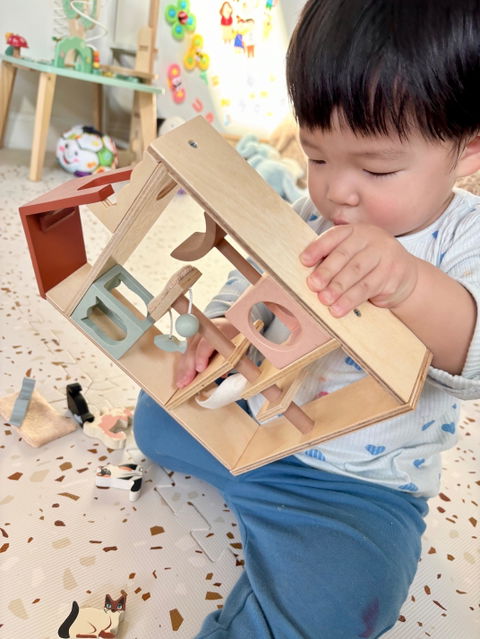
The Pirate Ship sits on a coffee table in the living room. The Activity Cube stays on the corner of our dining room table.
We're not hiding toys anymore because we don't need to. They're not eyesores. They're not screaming primary colors. They just blend into the space like they belong there.
Because they do.
Shop Open Ended Play Collection →
2. The Ones That Survive Siblings

Your first kid plays with the animal stacking blocks. They gnaw on them. Drop them. Throw them across the room in a fit of toddler rage.
Then your second kid inherits them. Still perfect. Maybe a tiny dent that just adds character.
The Montessori coin sorting box. The beehive stacking game. These aren't surviving childhood—they're outlasting it.
We used to buy toys for each kid. Now we buy toys once and they just... stay. Through multiple kids. Multiple stages. Multiple years.
That's not just quality. That's freedom from the replacement cycle.
Shop Fine Motor & Early Learning Collection
3. The 20-Minute Peace Toys

You know those toys that buy you exactly 90 seconds of quiet before they're bored and back in your lap?
These aren't those.
The wooden math learning board holds attention for 20 minutes. Sometimes longer. The Noah's balancing ark becomes an engineering challenge they're determined to solve.
It's not magic. It's just that open-ended toys don't run out of possibilities. There's no "winning." No batteries that die. No predetermined outcome.
Just a kid, a challenge, and enough focus that you can drink your coffee while it's still hot.
That's not a small thing.
Shop Educational Play Collection →
4. The Ones That Fit in the Diaper Bag

The build-a-face kit fits in the diaper bag pocket. The gift boxes clips to the stroller handle. The small vet set lives underneath the front car seat.
We're not lugging a separate "travel toy bag" anymore. We're just... prepared. Always.
Restaurant wait times. Doctor's office visits. That 45-minute car ride that somehow always happens during naptime but they refuse to sleep.
These portable wooden toys don't need charging. Don't have a million pieces to lose. Don't make sounds that announce to everyone around you that your child is playing with a toy.
They just work. Quietly. Reliably. Every single time.
Shop Travel & Portable Play Collection →
5. The Ones They'll Remember

Twenty years from now, your kids won't remember the plastic toys.
But they'll remember the wooden doctor kit where they "saved" all their stuffed animals. The vintage camera they used to "film" family dinners and backyard adventures. The vlogger kit that made them feel like a real filmmaker.
They are real props in their origin stories. The tools they used to figure out who they wanted to be.
The doctor who spent hours examining patients. The filmmaker who documented everything. The chef who ran an imaginary restaurant from the playroom.
Those memories? They're built on toys substantial enough to matter. Heavy enough to feel real. Quality enough to last through the stories they're still telling.
Shop Role Play & Careers Collection →
What Actually Changed
We didn't become perfect parents. We didn't suddenly have a magazine-ready playroom. We didn't transform into minimalists overnight.
We just started choosing toys that worked with us instead of against us. Toys that stayed out because they looked good. Lasted long because they were built well. Engaged deeply because they were designed thoughtfully.
The wooden toy collection didn't just change our playroom. It changed how we play. How we travel. How we think about what's worth keeping.
That's worth more than any toy bin we ever bought.